How to Clean a Washing Machine (Step-by-Step)
8 min read
If your laundry comes out smelling musty even after a full wash, the problem usually is not your detergent or your clothes. It is the machine itself. Knowing how to clean a washing machine is one of those small home skills that pays off every single week, because the appliance that is supposed to clean everything else quietly collects detergent residue, mineral deposits, lint, and mold along the way. The good news is that you do not need expensive products or special tools. With a bit of white vinegar, some baking soda, and a microfiber cloth, you can reset your washer in under an hour and keep it fresh for the long run.
Why Your Washing Machine Smells and Needs Regular Cleaning
A washing machine is the perfect environment for grime to build up. Every load leaves behind a thin film of detergent and fabric softener, especially if you use more than the recommended amount. Add warm water, lint, body oils, and a sealed door that traps moisture, and you have ideal conditions for bacteria and mold to grow.
That musty or sour odor you notice is the most common warning sign. Other clues include a dark film or slimy residue around the door seal, visible spots inside the drum, or laundry that simply does not smell clean. Front-load machines are especially prone to this because their rubber door gaskets hold standing water and stay closed between uses.
Left unaddressed, buildup does more than smell. It can transfer back onto clothes, reduce how well your detergent works, and contribute to clogs in hoses and filters. A regular cleaning routine keeps the machine efficient and your clothes genuinely fresh.
What You’ll Need: Vinegar, Baking Soda, and a Microfiber Cloth
One of the best things about this job is how few supplies it takes. Most of what you need is probably already in your kitchen. Gather the following before you start:
- White distilled vinegar to break down soap scum, dissolve mineral deposits, and neutralize odors.
- Baking soda to scrub away residue and absorb lingering smells.
- A microfiber cloth or two for wiping down surfaces without leaving lint behind.
- An old toothbrush or small soft brush for getting into seals, crevices, and dispenser slots.
- A small bucket or bowl for warm soapy water.
- Rubber gloves if you are dealing with visible mold.
A quick note before you begin: avoid mixing vinegar with bleach, and check your appliance manual, since a few manufacturers advise against vinegar on certain rubber and metal parts. If yours does, a dedicated washing machine cleaner tablet is a safe substitute for the vinegar step.
How to Clean a Front-Load Washing Machine (and the Rubber Gasket)
Front-load washers need a little extra attention because of that rubber door seal. Here is how to clean a washing machine of the front-load type from the inside out:
- Wipe down the gasket first. Peel back the rubber seal around the door and look inside the folds. This is where hair, coins, and black mold love to hide. Wipe it thoroughly with a microfiber cloth dipped in warm water mixed with a little vinegar, using your toothbrush for stubborn spots.
- Add vinegar to the drum. Pour about two cups of white vinegar directly into the empty drum, or into the detergent dispenser if your manual prefers that.
- Run a hot cycle. Select the hottest, longest cycle available, often labeled “sanitize,” “clean washer,” or “tub clean.” Let it run completely with no clothes inside.
- Add baking soda for a second pass. Sprinkle about half a cup of baking soda into the drum and run a second hot cycle. This scrubs and deodorizes anything the vinegar loosened.
- Dry everything. Wipe the drum, glass, and gasket dry with a clean cloth, then leave the door open so the interior can air out fully.
Dealing With Mold on the Gasket
If you see dark spots that do not wipe away, soak a cloth in a vinegar solution and press it into the affected folds for several minutes to loosen the growth, then scrub gently with the toothbrush. Stubborn mold may need a couple of repeat treatments. Always dry the seal completely afterward, because moisture is what allowed the mold to take hold in the first place.
How to Clean a Top-Load Washing Machine
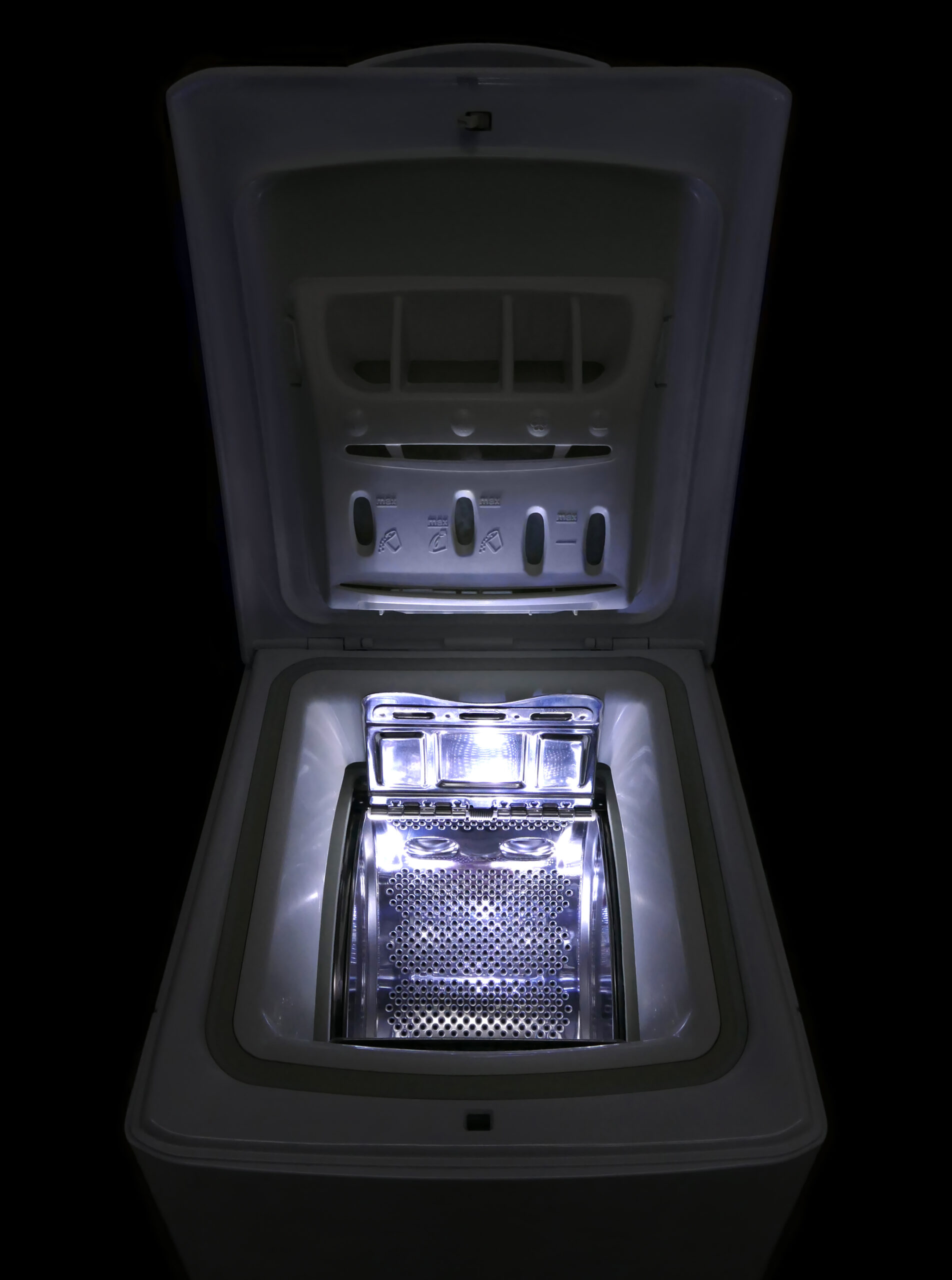
Top-load machines are a bit more forgiving, but they still benefit from the same vinegar-and-baking-soda approach. The method differs slightly depending on whether yours has a center agitator or is a high-efficiency model.
- Fill with hot water. Set the machine to the largest load size and hottest water setting, and let the drum fill.
- Add vinegar and let it soak. Pour in about four cups of white vinegar, let the machine agitate for a minute to mix, then pause the cycle and let the hot vinegar water sit for an hour. This soak breaks down buildup around the agitator and drum walls.
- Scrub the exposed parts. While it soaks, dip your cloth in the vinegar water and wipe the rim, lid, and the top edge of the drum where residue collects.
- Add baking soda and finish the cycle. Sprinkle in about one cup of baking soda, then let the full cycle complete and drain.
- Run a rinse. Finish with one more hot cycle of plain water to flush out any loosened debris, then wipe the drum dry.
For high-efficiency top-loaders that do not let you fill the tub manually, simply add the vinegar to the drum, run the dedicated cleaning cycle, and follow with a baking soda cycle as described above.
Cleaning the Detergent Drawer, Filter, and Dispensers
The drum is only part of the story. The compartments and filters are where some of the worst buildup hides, and they are easy to overlook.
- Detergent and softener drawer: Most drawers pull all the way out, often with a small release tab. Soak it in warm water, scrub the slots and the fabric softener cap with your toothbrush, and rinse. Wipe inside the empty cavity too, since gunk collects on the roof of the slot.
- Drain pump filter: Many front-loaders have a small access panel near the bottom front. Place a shallow tray and towel underneath, slowly unscrew the filter to drain the water, and remove any lint, coins, or debris. This filter is a frequent culprit behind odors and drainage problems.
- Dispenser nozzles and bleach trays: Wipe these down with a vinegar-dampened cloth to clear crusty residue that can clog over time.
Always check your manual before removing the drain filter, as not every model has one and the location varies.
How Often to Clean Your Washing Machine to Prevent Buildup
Consistency matters more than intensity. As a general guideline, run a full deep clean of the drum once a month if you wash frequently or use a lot of detergent and fabric softener. For lighter households, every two to three months is usually enough.
The smaller tasks deserve a shorter cycle. Wipe the door gasket and rinse the detergent drawer every week or two, and check the drain filter every few months. Front-load owners and anyone in a humid climate should lean toward the more frequent end of these ranges, since moisture and sealed doors accelerate mold growth.
Tips to Keep Your Washer Fresh Between Deep Cleans
A few simple habits will stretch the time between deep cleans and keep odors from coming back:
- Leave the door open after each load so the drum and seal can dry out instead of trapping moisture.
- Use less detergent. More soap does not mean cleaner clothes; it just leaves more residue. Stick to the recommended amount, and use the high-efficiency formula if your machine calls for it.
- Remove laundry promptly rather than letting damp clothes sit, which breeds that sour smell quickly.
- Wipe the gasket dry after big or hot loads, especially on front-loaders.
- Skip excess fabric softener, which is a major contributor to sticky buildup. A splash of vinegar in the rinse works as a gentler natural softener.
Frequently Asked Questions
Can I use bleach instead of vinegar to clean my washing machine?
Yes, bleach can disinfect and remove mold, but never mix it with vinegar, as the combination creates harmful fumes. If you choose bleach, run one cycle with it, then a separate plain rinse cycle, and skip the vinegar entirely for that cleaning session.
Why does my washing machine still smell after cleaning it?
Lingering odors usually mean a spot was missed. The most common culprits are a dirty drain pump filter, residue trapped in the detergent drawer, or moisture left in the door gasket. Clean those areas, then leave the door open between loads so the interior can dry completely.
Is it safe to clean a high-efficiency washer with vinegar and baking soda?
For most machines, occasional use is fine and effective. That said, a few manufacturers advise against vinegar on certain seals, so check your manual first. If vinegar is discouraged, a washing machine cleaner tablet run on the sanitize cycle is a reliable alternative.
Final Thoughts
Learning how to clean a washing machine takes one afternoon to master and only minutes to maintain after that. A monthly vinegar and baking soda cycle, regular wipe-downs of the gasket and drawer, and the simple habit of leaving the door open will keep odor, mold, and buildup from ever getting a foothold. Treat your washer to the same care it gives your clothes, and every load will come out cleaner and fresher for it.
Featured image: Open top-loading washing machine — W.carter (BY-SA) via Openverse