How to Deep Clean a Mattress (Step-by-Step)
7 min read
You wash your sheets every week, but the surface underneath them almost never gets attention. Over months and years, a mattress quietly collects sweat, dead skin, dust, body oils, and the occasional spill. That buildup is exactly what dust mites feed on, and it is often the hidden source of stale bedroom smells and morning stuffiness.
The good news is that you do not need a professional service or fancy equipment. When you deep clean a mattress the right way, you can lift surface stains, neutralize odors, and dramatically reduce dust using a few things you probably already own. This guide walks you through a safe, thorough routine from start to finish, plus how to treat specific stains and how often to repeat the process.
Set aside a morning or early afternoon for this. The one thing you cannot rush is drying time, so it helps to start when you have a few hours before bed.
Why your mattress needs a deep clean
Every night you shed skin cells and lose moisture through sweat. Your sheets absorb some of it, but plenty soaks straight through into the mattress. That warm, slightly damp environment is ideal for dust mites and the allergens they leave behind, which is why an old mattress can trigger sneezing, itchy eyes, or a scratchy throat.
Regular vacuuming and the occasional refresh keep that buildup in check. It also protects your investment: a clean, well-maintained mattress simply lasts longer and stays more comfortable. If anyone in your home has allergies or asthma, keeping the sleeping surface clean is one of the easiest wins in the whole house.
What you will need
Everything here is inexpensive and easy to find. You likely have most of it already.
- Baking soda — the workhorse for absorbing odors and lingering moisture
- A vacuum with an upholstery attachment — the softer brush head lifts dust without snagging fabric
- White vinegar — a gentle, natural spot treatment for stains and smells
- Dish soap or an enzyme cleaner — enzyme cleaners are best for protein stains like sweat, blood, or urine
- Clean cloths or microfiber towels — a few of them, ideally white so no dye transfers
- A spray bottle — for applying cleaner in a controlled mist
- A few drops of essential oil (optional) — lavender or eucalyptus for a fresh finish
Skip harsh bleach and heavy soaking. Mattresses are hard to rinse and even harder to dry, so gentle and controlled always beats aggressive.
Step-by-step: how to deep clean a mattress
Follow these steps in order. The sequence matters — stripping and vacuuming first means your spot treatments and baking soda work on a clean surface, not on top of loose grime.
- Strip the bed completely. Remove sheets, mattress protector, and any pillows. Wash the bedding on the hottest setting the fabric allows while you work — hot water helps kill dust mites.
- Vacuum the entire surface. Using the upholstery attachment, go over the top in slow, overlapping passes. Pay extra attention to seams, piping, and the sides where dust collects. Then flip or rotate as needed to reach every side.
- Spot-treat visible stains. Dab (do not rub) each stain with the right cleaner for that mess — see the next section. Work from the outside of the stain inward so you do not spread it.
- Cover the mattress in baking soda. Sift a generous, even layer over the whole surface. For a scented finish, mix a few drops of essential oil into the baking soda first and stir well before sprinkling.
- Let it sit — the longer the better. Leave the baking soda on for at least an hour, ideally several hours. It pulls out moisture and absorbs odors as it sits. If you can, open a window or let sunlight hit the mattress during this time.
- Vacuum again, thoroughly. Remove every trace of baking soda with the upholstery attachment. Run your hand across the surface to check for any gritty patches and vacuum those spots again.
Once you finish, let the mattress air out uncovered for a while before you remake the bed. Putting sheets back on a surface that still feels even slightly damp invites mildew.
Treating stains and odors
Different messes call for different treatments. Whatever the stain, always blot rather than scrub, and use as little liquid as possible so the mattress does not get soaked.
- Sweat and yellowing: Mix a little dish soap with cool water, dip a cloth, and blot the discolored area. Follow with a clean damp cloth to lift the soap, then pat dry.
- Urine (fresh or set-in): An enzyme cleaner is your best friend here because it breaks down the compounds that cause both the stain and the smell. Apply, let it sit per the label, then blot dry.
- Blood: Use cold water only — heat sets blood permanently. Blot with a cloth dampened in cold water, and for stubborn spots, dab with a paste of baking soda and a little cold water.
- General odors: The baking soda step above handles most smells. For anything stronger, lightly mist a solution of equal parts white vinegar and water, let it dry fully, then re-apply baking soda.
After any wet treatment, speed up drying with a fan aimed at the spot or by opening windows. A hair dryer on a low, cool setting can help with a small stubborn patch — just keep it moving and never let the fabric get hot.
How often to clean and protect it
Once your mattress is fresh, a little routine care keeps it that way and stretches the time between deep cleans.
- Vacuum the surface every one to three months, or whenever you flip your mattress.
- Do a full deep clean roughly twice a year — a spring and fall rhythm is easy to remember.
- Use a washable mattress protector. This is the single most effective habit. It blocks sweat and spills before they reach the mattress and can go straight in the wash.
- Wash sheets weekly in hot water when the fabric allows, to keep dust mites and oils from building back up.
- Air out the room. Pulling back the covers for a few minutes each morning lets trapped moisture escape instead of sinking into the mattress.
These small steps do most of the heavy lifting, so your twice-a-year deep clean is a refresh rather than a rescue.
Frequently asked questions
Can I use a steam cleaner on my mattress?
You can, but be cautious. Light steaming can help sanitize the surface, but too much moisture is hard to dry out and can lead to mildew inside the mattress. If you steam, keep the nozzle moving, use minimal passes, and allow several hours of drying with good airflow before remaking the bed.
How long does baking soda need to stay on the mattress?
At least an hour will do the basics, but longer is better. If you can leave it for several hours — or even a full day while you are out — it will absorb more moisture and odor. Just be sure to vacuum every bit of it back up before you sleep on it.
How do I get rid of a musty smell that keeps coming back?
A recurring musty smell usually means moisture is still trapped somewhere. Deep clean with the baking soda method, then stand the mattress on its side in a well-ventilated room or in indirect sunlight for a few hours to dry it out fully. Adding a protector and airing the bed daily helps prevent it from returning.
Is deep cleaning safe for memory foam mattresses?
Yes, with a lighter touch. Memory foam does not like getting wet, so rely mainly on vacuuming and baking soda, and keep any spot treatments to a barely damp cloth. Never soak the foam, and always let it dry completely before putting sheets back on.
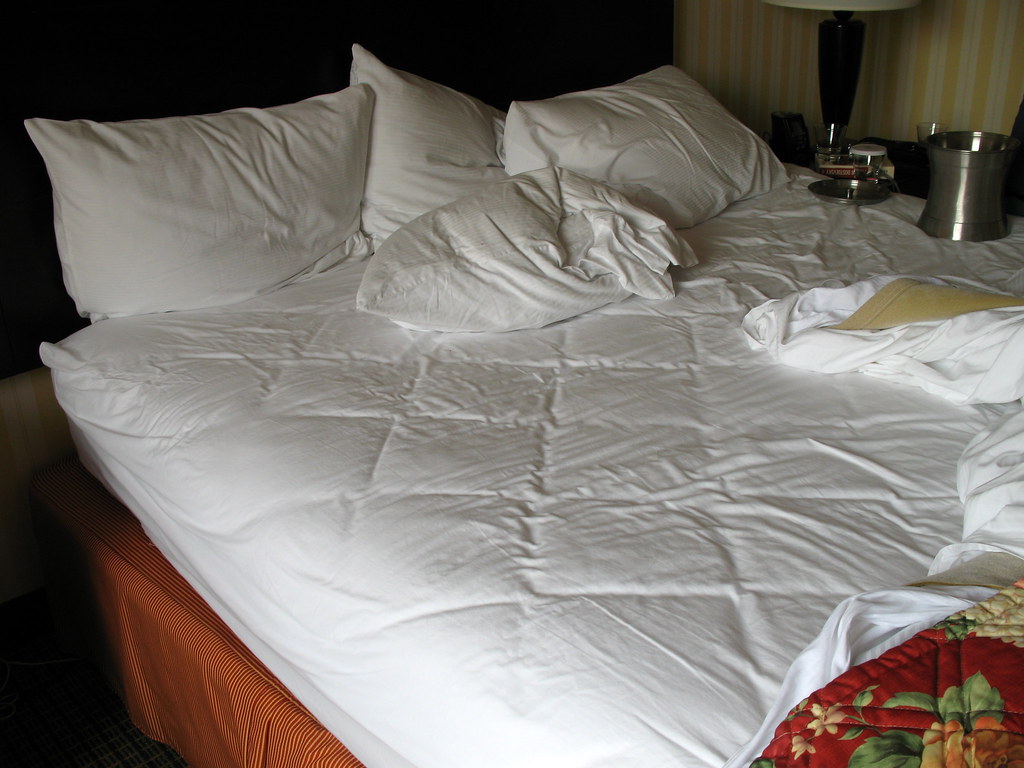
Featured image: The Hilton, Bed — Consumerist Dot Com (BY) via Openverse